How to Design Marketing Strategy in 2027 (Free Template)
How to design marketing strategy in 2027 with one free four-section doc: goals, products, channels and owners, plus a quarterly check-in to keep it alive.
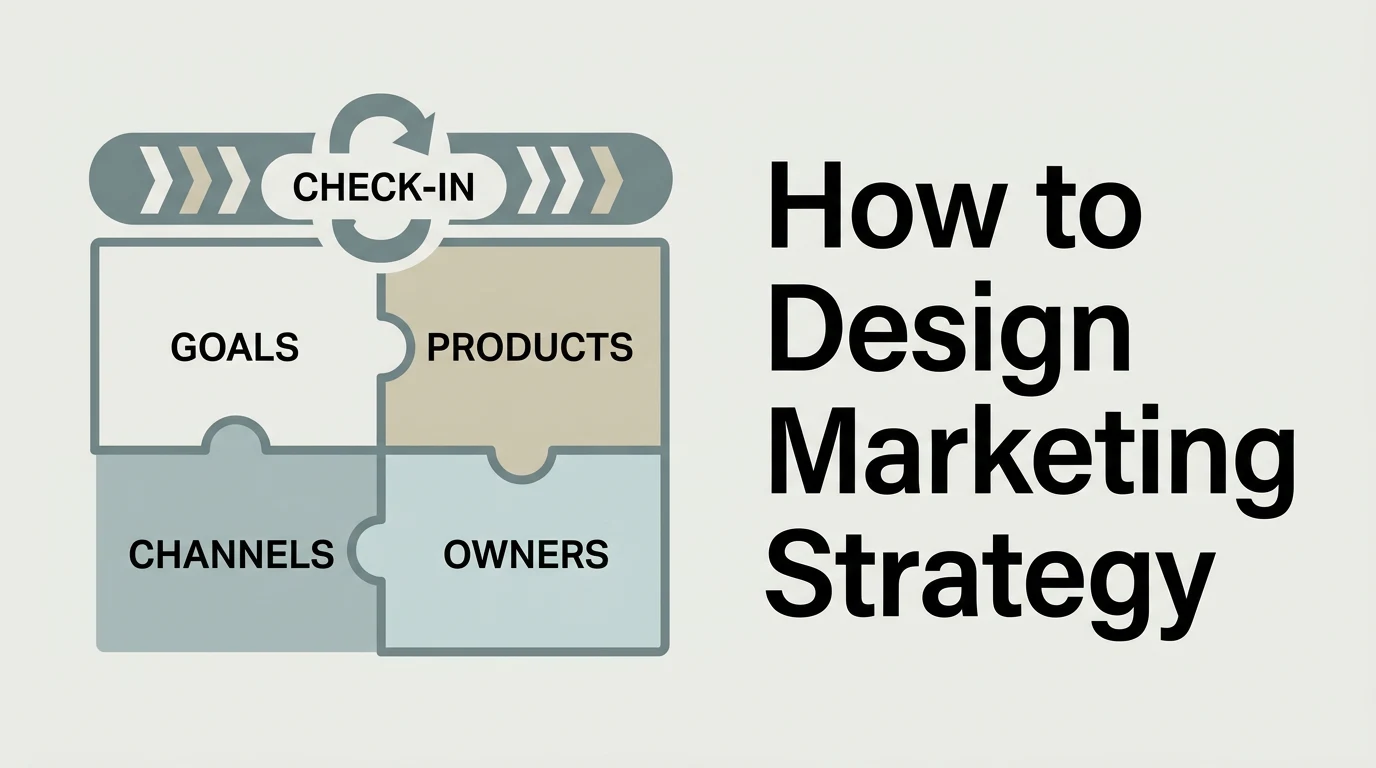
How to design marketing strategy in 2027 comes down to one document your team can act on by Monday, not a deck. Here is a four-section template that fits in about a dozen pages, and the habit that keeps it from dying in a folder.
In short: Design 2027 strategy as one Google Doc with four sections: goals, what you sell, how you market it, who owns what. Fill it in alone and argue together, then review it every quarter.
Tom Orbach, who writes the MarketingIdeas newsletter, is behind the template. His story is worth telling first, because it explains every odd choice in the doc.
The 90-page PDF nobody could use
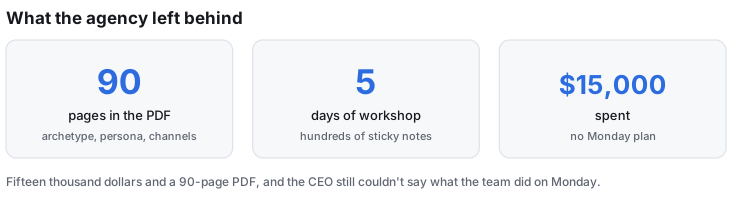
In 2021 a startup hired Orbach to consult on its marketing. Before he arrived, the company had paid an agency for an annual strategy workshop: five days of whiteboards, with hundreds of sticky notes still covering the walls when he got there.
That agency left behind a 90-page PDF. It named a brand archetype, "The Explorer". It described a target persona, "Ambitious Amy", 34, living in Brooklyn and drinking oat milk. LinkedIn and email were the chosen channels, and a mission and a vision were locked in.
Then Orbach asked the CEO what the team was doing on Monday. No idea, the CEO said. They had spent $15,000 and still didn't know what to do next.
Orbach told him to delete the PDF.
He opened a blank Google Doc and asked one question: what would a strategy document look like if it only held things a team could act on?
Notice who the villain is here. Not the CEO, who did what most leaders do and paid for clarity. Not even the agency, necessarily. What failed was the deliverable, because a brand archetype can't be assigned to anyone and a persona has no due date.
Why the document matters more in 2027
Budgets aren't loose enough to waste a week on a PDF. Gartner's 2025 survey of about 400 CMOs found marketing budgets flat at 7.7% of company revenue, the same as the year before, with paid media taking roughly 31% of it. That survey leaned towards large companies, so read it as a direction, not a rule for your team. Still, the direction is plain: flat money and more channels, with a lot of pressure to say what you will stop doing.
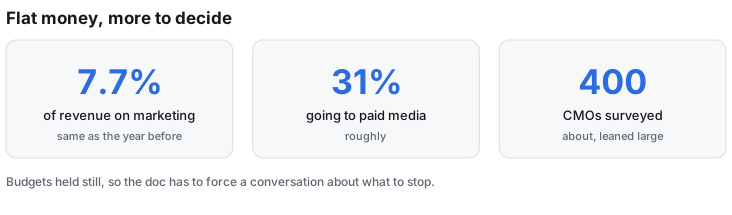
A strategy doc that lists every channel with an owner and a budget forces that conversation. A persona sheet doesn't.
How to design marketing strategy in 2027, section by section
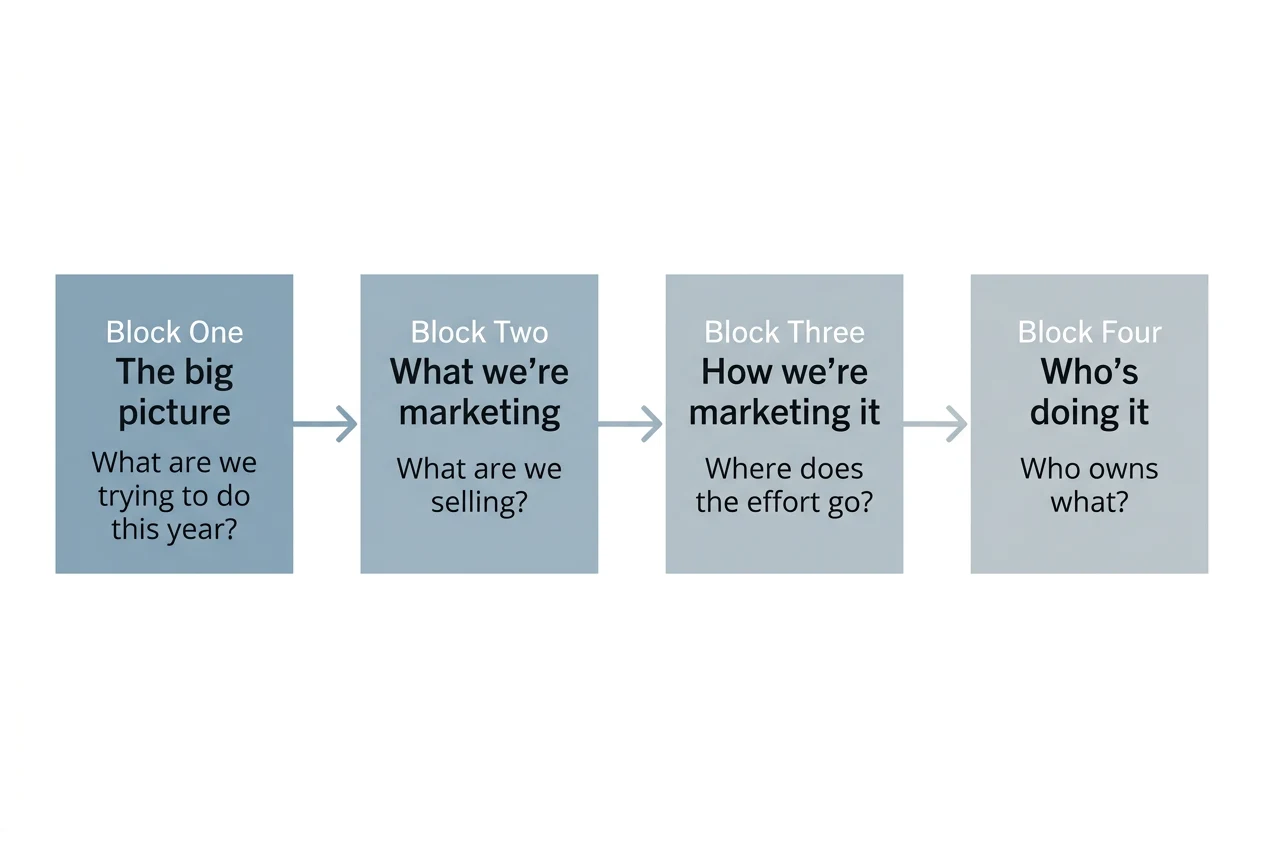
Four sections make up the template, and each answers one question a leader should be able to answer without opening a slide.
| Section | The question it answers | What goes in it |
|---|---|---|
| 1. The big picture | What are we trying to do this year? | One theme, 2 to 3 goals, quarterly plan, budget, last year's lessons |
| 2. What we're marketing | What are we selling? | New launches, and a decision on every existing product |
| 3. How we're marketing it | Where does the effort go? | Channels, content pillars, big bets, events and PR, AI use |
| 4. Who's doing it | Who owns what? | Roles, three responsibilities each, and what is not their job |
Section 1: one sentence, then goals
It opens with a fill-in-the-blank: "In our wildest dreams, [year] will be our year of [big change] because [reason]." For 2027 you would write something like "our year of 100K newsletter subscribers because we're building a referral program that actually works".
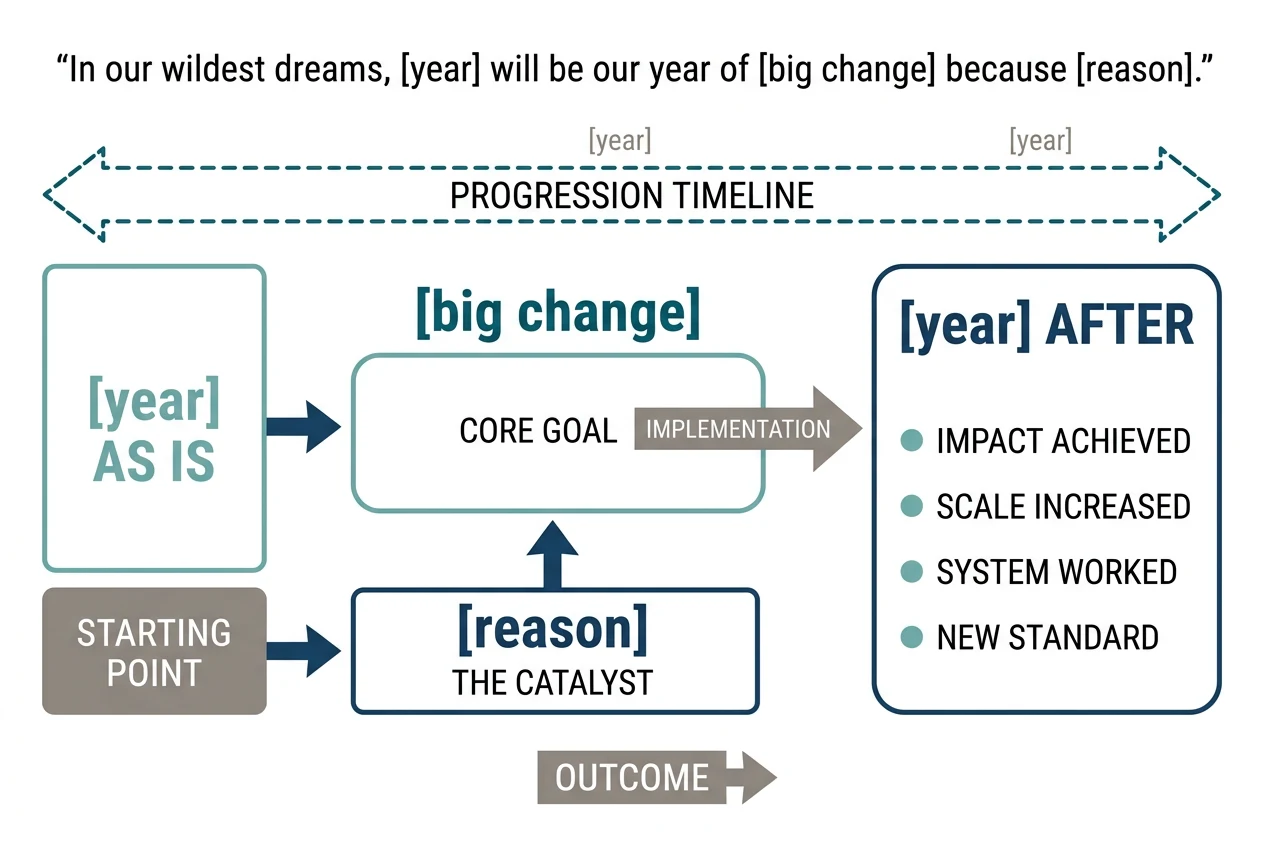
That sentence sits above the goals. Each goal then takes one line: what you'll do and what outcome you want, measured by which metric. The example in the doc is launching an enterprise tier to triple revenue per customer, measured by enterprise revenue and deal size.
Quarterly plans go in a small table: initiative, KPI, owner, status. On the budget page, spend splits across paid media, organic, content, brand, partnerships, tools, hiring and experiments. Then it asks for two things most budget sheets leave out. One is a stated reason for the split. The other is a plan B: if a certain thing happens, what moves?
Two more blocks round the section out, what worked and what flopped last year, and what is changing in your market. Both ask for an action, not an observation. "Biggest fail: this happened because of that, and this year we're fixing it by this."
Section 2: grow it, maintain it, or sunset it
New launches get a table and, for each one, a full launch plan. Each plan covers the problem it solves, the specific customer, how it's different from alternatives, and the price and why. It also holds pre-launch, launch day and post-launch plans, plus the team and the budget. Last, it asks what could go wrong.
Sharper still is the second half. Every product you already sell gets one of three labels: grow, maintain or sunset. Next to the label go this year's goal, what's working, what needs fixing and what changes.
Most companies keep selling dead products because nobody ever decided to kill them. A column that must be filled in makes someone decide. It's the cheapest strategic act in the whole document, and an agency workshop almost never produces it.
Section 3: channels, pillars and a filter for big ideas
Every channel gets one row in the channel table: what you'll do there, the KPI, the budget, the priority and the owner. Its own example is LinkedIn: post three times a week, founder-led, 50K impressions a month, $500 a month, high priority, one named person.
There's one rule I'd defend to anyone. You can't mark everything high priority. Orbach suggests three channels, maybe four, and the rest are medium or low, or marked "test". If everything is high, nothing is.
Content pillars come next. Pick three to five recurring themes, specific enough that they let you say no to something. "We post about marketing" isn't a pillar.
Then comes the part that makes this template different: the filter for big creative bets. Before you greenlight a stunt, you run it past five checks.
- Expected and unexpected. One familiar element and one twist, not five.
- An emotional trigger: status, humor, money, identity or conflict.
- Built-in shareability. Can people make their own version?
- A momentum plan. Who pushes first, and how do you wake up two groups in the first hour?
- A shared moment. Will many people experience it at once?
An idea should tick three or four boxes. Each stunt also gets a line for the realistic best case and a line for what you lose if it flops.
A fair warning from me: this filter is a heuristic, not a measurement, and nothing in the doc shows that ideas ticking four boxes spread more than ideas ticking two. Its value is cheaper than that. It stops a room of people from falling in love with one idea before anyone has asked how it travels.
This section also has an events and PR block, and a small table for AI use: which task, which tool, what the workflow is, and where a human edits. Last is the inspiration board, a running list of marketing you're jealous of, what you love about it, where you could use it, and your own spin. Steal on purpose, and write down what you stole.
Section 4: who owns it, and who doesn't
Section 4 lists the team, including agencies and contractors. Each person then gets three responsibilities, and for each one the doc asks what it means, the actions, the timeline and the success metric.
Last for every person is "what's not their job". Most teams skip it, and it's the one that ends most arguments. "Sarah owns content. Sarah does not own paid ads or social comments, and she doesn't run event logistics." Written down in January, that sentence saves a lot of Slack threads in June.
What the template doesn't do
It's an operating plan. It doesn't ask who you're trying to win and why they should pick you, and the only place it asks about the target customer is inside a new launch. If your positioning is shaky, add a short block to Section 1 before the goals, or you'll have a very organized plan for the wrong market.
It also depends on honest inputs. A table of KPIs is only as good as the numbers you can actually pull. And it ignores the rules of your sector: what a channel row may say is very different in healthcare, as the post on hospital marketing strategy shows.
Fill it in alone, then argue
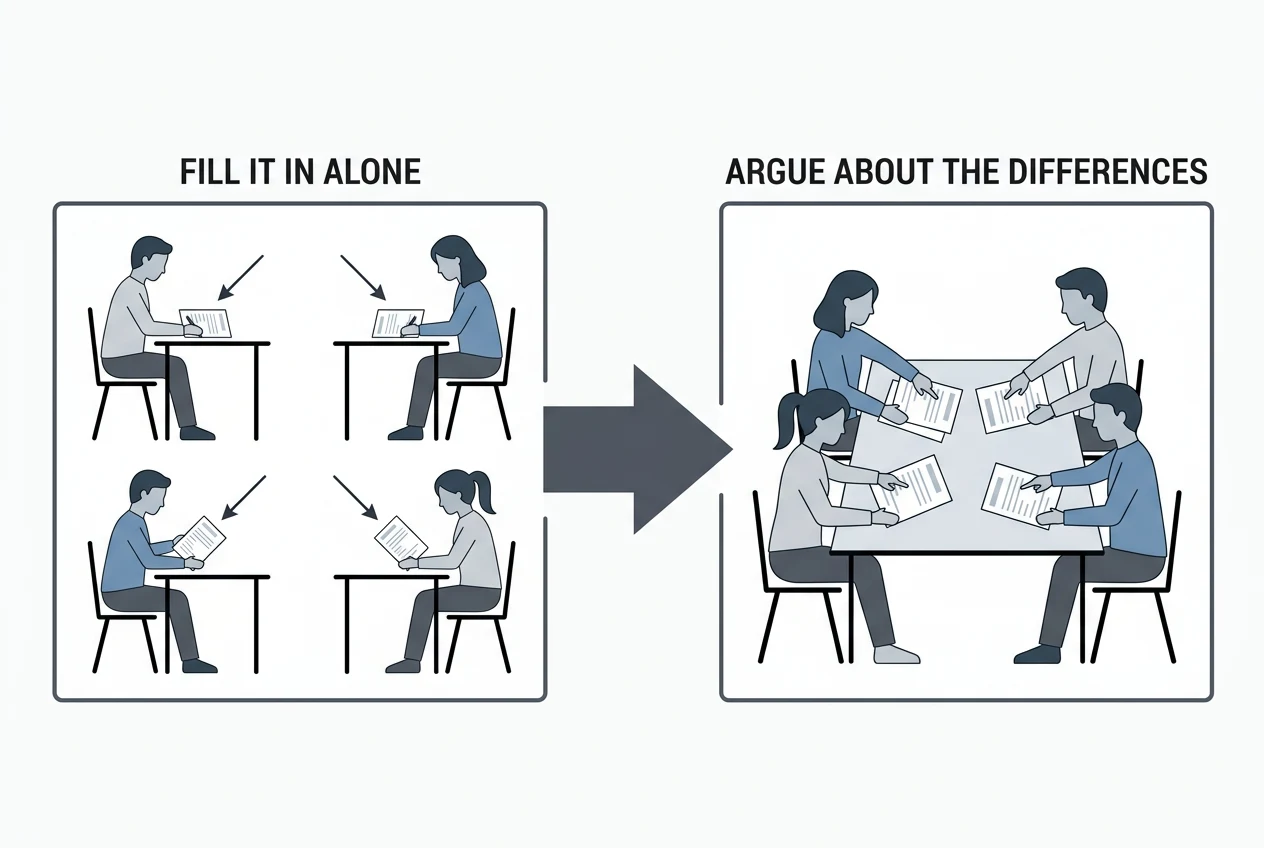
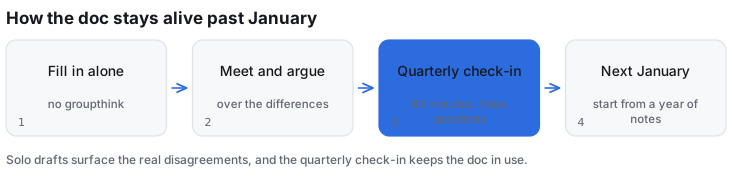
Orbach's advice on process is the part I'd copy first. Don't fill it in together in a room, because you get groupthink and the loudest person wins. Have everyone complete their own sections alone, then meet to argue about the differences. That's where the strategy happens.
For a leader, that has a useful side effect. Before anyone is in the room, you can see whether your head of content and your head of growth are even describing the same year.
The quarterly check-in
Most strategy docs die after January. Here the fix is small: block 60 minutes each quarter and ask three questions.
- What did we say we'd do?
- Did we do it?
- What needs to change?
Keep the lessons section updated as you go. Next January you won't start from a blank page, you'll start with a year of notes in the same document, which is the real reason to build it as a Google Doc and not a slide deck.
If I were starting from nothing this week, I'd do it in this order. Write the one sentence. Pick the three high-priority channels. Label every existing product. Name what's not each person's job. Everything else can wait until the doc has survived its first quarter.